Does homeowners insurance cover window replacement in Connecticut?
By Dana Whitfield · Updated 2026-06-26

This is general information about how homeowners insurance typically treats window damage, not a guarantee of coverage. Every policy is different, so confirm the specifics with your own insurance agent before you file a claim or turn down a repair for cost reasons.
Window damage insurance claims trip people up because the answer depends entirely on why the window is broken, not just that it is broken. A cracked pane from a storm and a cracked pane from decades of age are treated very differently by an insurance adjuster, even though they look the same from the outside.
What’s typically covered
Most standard homeowners policies cover damage from sudden, accidental events, often called covered perils. For windows, that commonly includes:
- Wind damage during a storm, including a tree limb or debris breaking the glass
- Hail damage
- Vandalism or a break-in that damages the window or frame
- Fire or smoke damage
- Certain types of water damage from a sudden, accidental source, like a burst pipe near a window
What’s usually not covered
Insurance is built around sudden, accidental loss, not gradual deterioration. That means these situations are typically excluded:
- Old, drafty, or foggy windows that have simply worn out over time
- Failed seals on insulated glass units from age, not a specific event
- Rot or water damage that built up slowly from poor flashing or a long-standing leak
- General wear and tear, including cracked caulk or worn weatherstripping
If an adjuster determines the damage is a maintenance issue rather than a sudden event, the claim will likely be denied, and you would be responsible for the repair or replacement cost.
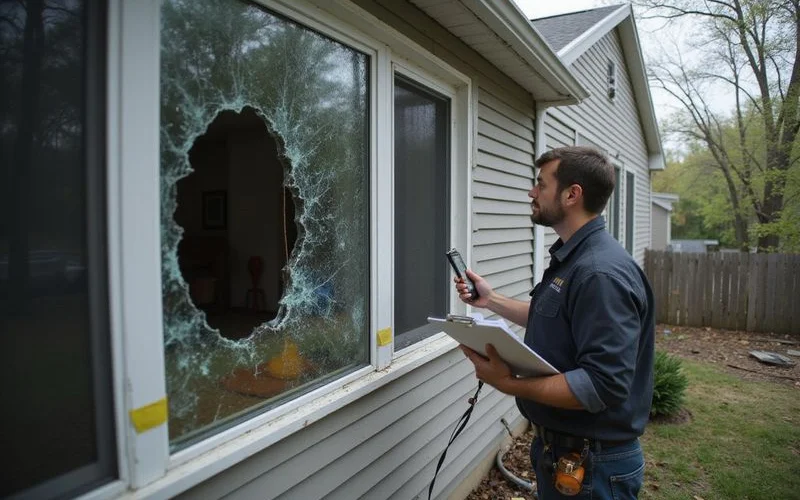
Coverage at a glance
| Situation | Typically covered? |
|---|---|
| Tree branch through window during a storm | Yes, usually |
| Break-in or vandalism damage | Yes, usually |
| Fogged glass from an aged, failed seal | No |
| Rot from a long-term, undetected leak | No, usually treated as a maintenance issue |
| Hail damage | Yes, usually |
| Simply replacing old windows for efficiency | No |
Should you file a claim?
Before calling your insurer, compare the repair or replacement cost to your deductible. If the cost is close to or below your deductible, filing may not be worth it, since a claim on your record can affect future premiums even when it is paid out. For higher-cost damage that clearly falls under a covered peril, like storm damage to multiple windows, filing usually makes financial sense.
Document everything before repairs start: photos of the damage, the date and cause if you know it (a specific storm, for example), and any related damage nearby. This makes the claims process faster and gives the adjuster clear evidence to work from. A written repair estimate also helps here, and our rubric page explains what we look for in a company’s pricing transparency if you want a sense of what a fair quote looks like.
What an adjuster is actually looking for
When an adjuster reviews a window damage claim, they are trying to answer one question: was this sudden and accidental, or did it develop gradually. That is why the same photo of a cracked window can lead to two very different outcomes depending on the story behind it. A branch through the glass during a documented storm has a clear cause and a clear date. A crack that “was there for a while” and finally spread is harder to tie to a specific covered event, and an adjuster may reasonably treat it as gradual deterioration instead.
This is also why timing matters. Filing a claim soon after the damage happens, with photos and a clear description of what caused it, gives the adjuster less room to question whether the damage is really sudden versus long-standing.
How the deductible affects the math
Your deductible is the amount you pay before insurance coverage kicks in. If your deductible is a set dollar amount and the repair costs close to that amount, filing barely changes what you pay out of pocket while still adding a claim to your record. Larger losses, like storm damage across several windows, make more sense to file, since the insurance payout meaningfully exceeds the deductible. Run the math before you call: subtract your deductible from the estimated repair cost, and that is roughly what insurance would actually save you.
Getting repairs done after a claim
Once a claim is approved, you generally have the freedom to choose your own window repair company rather than being locked into a specific vendor, though some insurers maintain a preferred list. This directory is one place to compare local options and see how they handle warranty and follow-up work, which matters if any issue turns up after the repair is done. Get a written estimate before work begins so the final invoice matches what the insurer approved, and keep copies of all paperwork in case a dispute comes up later.
FAQ
- Does insurance cover windows that are just old and drafty?
- No. Standard homeowners policies cover sudden, accidental damage like storms, fallen branches, or break-ins. Gradual wear, failed seals, or windows that are simply out of date are considered maintenance issues and are not covered.
- Will filing a claim for a broken window raise my premium?
- It can, especially if you have filed other claims recently. For a single inexpensive repair that costs close to your deductible, it is often not worth filing at all. Compare the repair cost to your deductible before you call your insurer.
- What if a tree branch breaks my window during a storm?
- This is a textbook example of what homeowners insurance is meant to cover, since it is sudden and caused by a covered peril like wind or a falling object. Document the damage with photos before any repair work begins.
- Does insurance cover upgrading to storm or impact windows?
- Not usually as a standalone upgrade, though some insurers offer premium discounts for impact-rated windows in higher-risk areas. Ask your agent directly whether your policy offers that credit.