Window leaks and water damage: what's really going on
By Dana Whitfield · Updated 2026-07-02
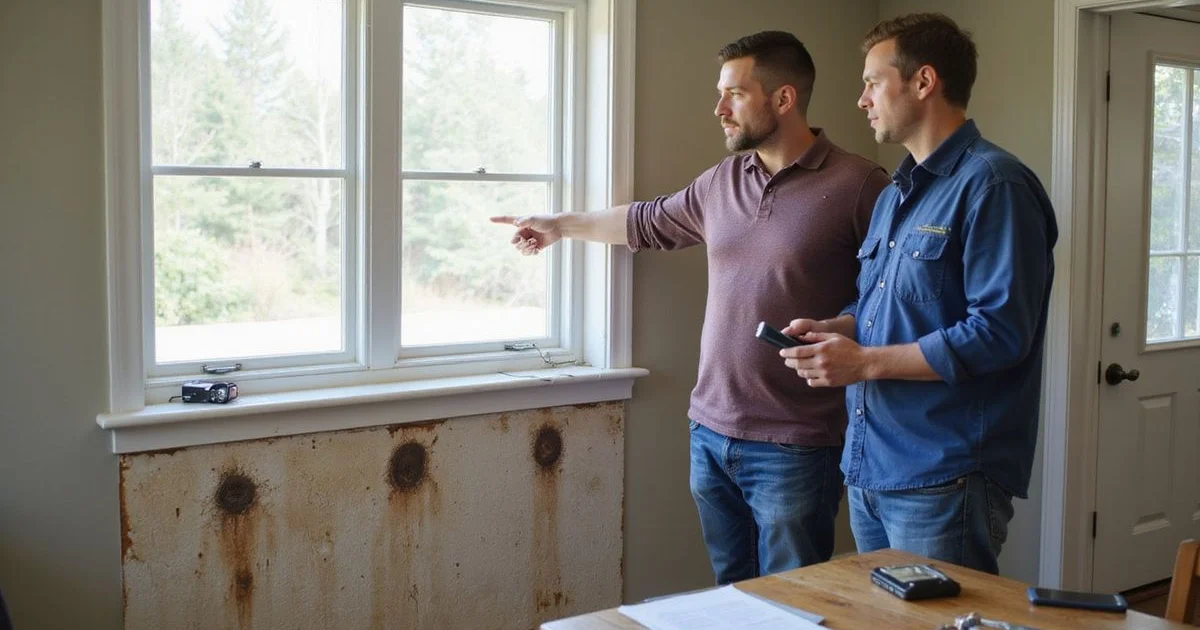
A window leak rarely announces itself clearly. It shows up as a faint stain on the drywall below a sill, a musty smell in a closet on an exterior wall, or a spot of peeling paint that keeps coming back no matter how many times it gets touched up. Figuring out where the water is actually getting in matters more than patching the symptom.
Where window leaks usually start
Three areas account for most window leaks in Connecticut homes:
Failed or missing caulk and sealant. The caulk between the window frame and the surrounding siding or trim is a wear item. It cracks, shrinks, and pulls away over years of freeze-thaw cycles, opening a path for wind-driven rain to get behind the trim.
Flashing problems. Flashing is the layer that directs water around and away from a window opening, tucked behind the siding where you cannot easily see it. If it was installed incorrectly, or is missing altogether on an older home, water can work its way in even when the visible caulk looks fine.
A failing window seal or sash. On older windows, the seal between the sash and frame can wear out, or the sash itself can warp enough that it no longer closes tightly against the frame, letting water in around the edges during hard rain.
Sorting out where the water is coming from
Look for a pattern the next time it rains hard:
- Staining that starts right at the top corners of the window frame, spreading down: often points to the window or its flashing
- Water appearing along the bottom sill only: could be condensation running down, or a failed seal at the sill
- Staining well above or to the side of the window, tracking down toward it: may be coming from the roof or siding, not the window itself
- Water only during wind-driven rain from one direction: points to a gap on that specific side of the frame
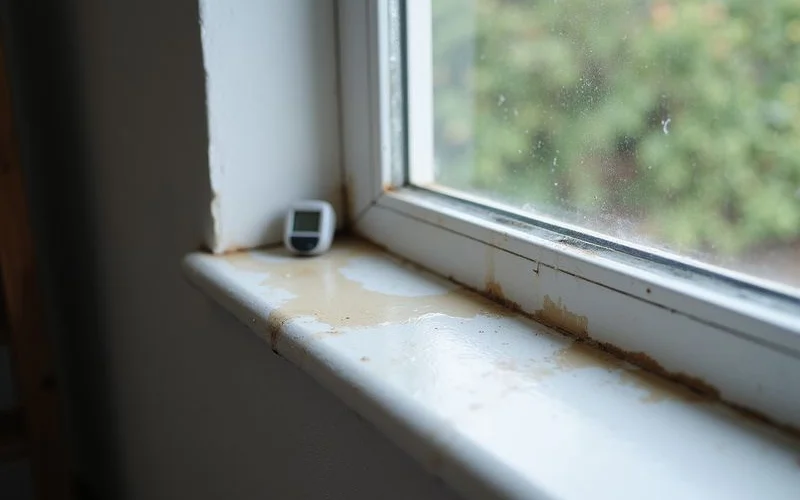
Why it’s worth acting quickly
Water that gets behind a wall does not stay contained to the spot where you first notice it. It can travel along framing members, soak into insulation, and sit against wood long enough for rot or mold to set in, all before it becomes visible on the interior surface. A leak that looks minor from inside the house can represent a much larger problem once a contractor opens up the wall.
Common causes and what they usually mean
| What you’re seeing | Likely cause | Urgency |
|---|---|---|
| Staining at the top corners, worsens with wind-driven rain | Failed flashing or caulk gap | Address soon; water is likely reaching the wall cavity |
| Foggy glass, no staining on the wall | Failed seal between glass panes | Not urgent structurally, but a sign the glass unit needs attention |
| Musty smell, no visible stain yet | Possible hidden moisture behind the wall | Worth investigating before it becomes visible damage |
| Water only at the very bottom of the sash | Could be condensation, not a true leak | Monitor; check indoor humidity first |
Why leaks tend to reappear on older homes
Connecticut’s mix of humid summers and freeze-thaw winters is hard on the materials that seal a window in place. Caulk that was applied a decade ago has likely gone through dozens of expansion and contraction cycles, and even a well-installed original flashing job can develop small gaps as the surrounding wood shifts over the years. This is part of why a leak that was fixed once can come back a few years later somewhere nearby on the same wall, rather than necessarily meaning the original repair failed.
Getting it diagnosed properly
A window repair technician who is used to chasing down leaks, not just replacing glass, will typically check the exterior caulk and flashing first, since those are the most common and least expensive fixes. If the leak persists after resealing, the next step is usually removing interior or exterior trim to inspect the flashing directly. Catching a leak early, before it has had a season or two to work into the framing, is almost always cheaper than waiting until the damage is visible on your walls or ceiling. If you are trying to decide whether to tackle part of this yourself, our DIY vs. professional window repair guide breaks down which fixes are safe to attempt and which ones need a technician.
If you are comparing repair companies on this directory, our rubric weighs how thoroughly a company diagnoses a problem, not just how fast they can schedule a visit, which is worth keeping in mind for a leak that has been misdiagnosed once already.
FAQ
- How do I know if water is coming from the window or somewhere else?
- Watch where the water first appears during or right after rain. Staining that starts at the top corners of the window frame usually points to the window or its flashing. Water that shows up on the wall well below or beside the window may be traveling from the roof, siding, or a different penetration entirely.
- Is a little condensation on the inside of the glass the same as a leak?
- No. Condensation on the interior glass surface is usually a humidity issue inside the home, not a window failure. Moisture trapped between two panes of glass, on the other hand, means the seal on that glass unit has failed.
- Can a window leak cause mold?
- Yes, if it goes unaddressed. Water sitting inside a wall cavity around a window frame creates the damp, dark conditions mold needs, and it can spread inside the wall before it is visible on the surface.
- Is it always the caulk that's the problem?
- Not always, but it is one of the most common and cheapest things to check first. Cracked or missing exterior caulk lets water behind the trim. If resealing the caulk doesn't stop the leak, the problem is likely the flashing or the window itself.